
Can AI Agents Understand and Recommend Your Brand? A 20-Point AI Visibility Audit
AI agents recommend brands they can clearly identify, verify through trusted sources, and connect to a specific product, service, location, or area of expertise.
An AI visibility audit should measure brand mentions, recommendation position, sentiment, citation sources, accuracy, and competitive share of voice.
Strong Google rankings help, but they do not guarantee visibility in ChatGPT, Gemini, Perplexity, Claude, or Google AI Overviews.
Consistent brand information, crawlable content, structured data, expert authorship, reviews, and third-party mentions strengthen AI visibility.
AI recommendations change, so brands should repeat priority prompt tests monthly and complete a broader audit quarterly.
Is Your Brand Visible When Customers Ask AI for Recommendations?
A potential customer may never type your company’s name into Google. Instead, they might ask ChatGPT for the best provider in your category, use Gemini to compare local businesses, or ask Perplexity which company offers the most reliable solution.
If your brand is missing, described incorrectly, or consistently ranked below competitors, traditional analytics may never reveal the lost opportunity. There is no website session, form submission, or abandoned cart to measure because the decision started (and potentially ended) inside an AI-generated answer.
That is why an AI brand visibility audit matters. It shows whether AI agents understand your brand, which sources shape that understanding, and whether the systems are confident enough to recommend you.
As explored in our guide to why ranking first is not enough when AI cannot understand your business, modern visibility depends on more than rankings. Your brand must be identifiable, credible, consistent, and supported across the wider digital ecosystem.
How Do You Measure Your Brand’s AI Visibility?
1. Build a Realistic Prompt Set
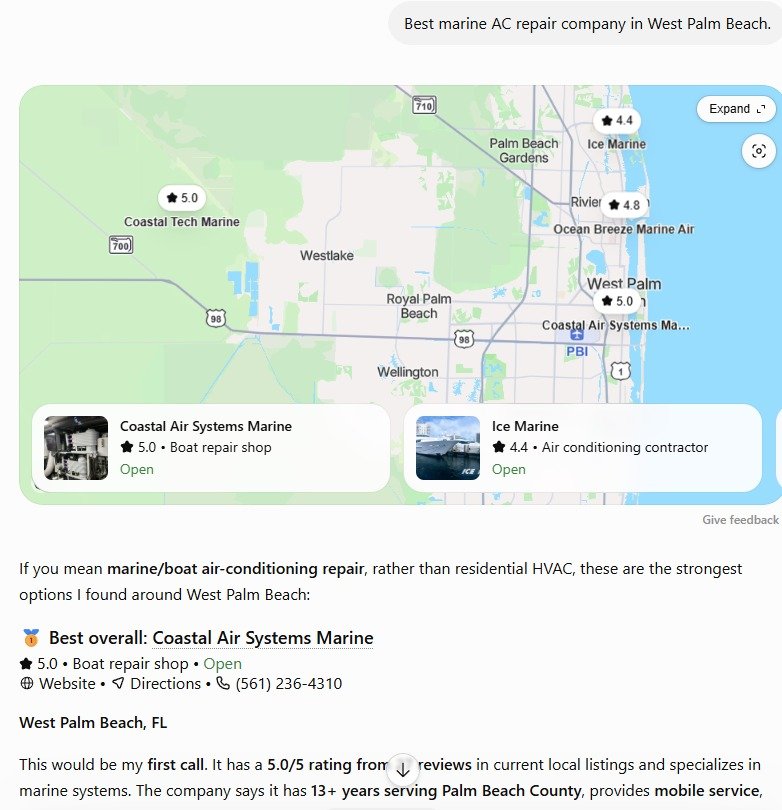
Create 20–50 prompts based on questions customers ask during awareness, consideration, and decision stages. Include non-branded queries, example: “Best marine AC repair company in West Palm Beach.” and branded comparisons such as “[Brand] vs. [Competitor].”
2. Test Multiple AI Platforms
Run the same prompts through ChatGPT, Gemini, Perplexity, and Claude. Each platform retrieves and evaluates information differently, so visibility in one does not guarantee visibility in another.
3. Calculate Your Visibility Rate
Divide the number of prompts that mention your brand by the total number tested. If you appear in four of 20 responses, your visibility rate is 20%.
A Reddit discussion illustrating what a 0/20 AI visibility score can mean for an established brand highlights an important reality: a company can perform well in conventional search yet remain practically absent from AI recommendations.
4. Record Recommendation Position
Being mentioned last in a list of ten companies is different from being recommended first. Record your average position whenever an AI system presents an ordered shortlist.
5. Evaluate Accuracy and Sentiment
Check whether AI responses accurately describe your services, products, pricing, locations, and ideal customers. Mark each mention as positive, neutral, or negative.
6. Document Every Citation
Record the pages and third-party sources used to support each answer. Our guide to earning brand mentions in AI-generated answers explains why citations from credible external sources can be as valuable as information published on your own website.
7. Compare AI Share of Voice
Track how frequently your brand appears compared with three to five direct competitors. The AI brand tracking and search audit framework recommends measuring visibility, recommendation position, sentiment, citations, and share of voice together instead of treating mentions as the only success metric.
Expert Insight: A mention proves that an AI system recognizes your brand. A recommendation shows stronger confidence that your brand is a suitable answer. Measure both, but prioritize accurate recommendations for commercially valuable prompts.
Can AI Agents Clearly Understand Your Brand?
Once you know where your brand appears, examine the signals influencing those results.
8. Define Your Brand as a Clear Entity
Your website should plainly explain who you are, what you offer, whom you serve, and where you operate. Strengthening these relationships is central to entity SEO for AI search.
9. Check Brand Information for Consistency
Confirm that your business name, descriptions, services, contact information, leadership, and locations are consistent across your website, social profiles, directories, review platforms, and media mentions.
10. Strengthen Author and Expert Profiles
Articles should have accurate bylines connected to detailed author profiles. Include relevant experience, credentials, areas of expertise, professional profiles, and other content written by the author.
11. Make Important Answers Easy to Extract
Use descriptive headings, concise opening answers, clear definitions, comparison tables, ordered steps, and useful FAQs. A strong LLM SEO content strategy helps machines interpret information without making the article awkward for human readers.
12. Add First-Hand Experience
Include original examples, screenshots, research, customer questions, tested processes, case studies, and expert observations. AI systems have plenty of generic summaries; distinctive evidence gives them a reason to cite you.
13. Review Topic Coverage and Cannibalization
Identify thin articles and multiple pages targeting the same intent. Consolidate overlapping content and build focused topic clusters instead of publishing endless variations of the same subject.
14. Improve Contextual Internal Linking
Connect informational content to relevant services, case studies, authors, and supporting resources. Descriptive anchor text helps users and retrieval systems understand how pages relate.
Expert Insight: AI-friendly content should not sound like it was written for a machine. The strongest answer content is clear enough to extract, credible enough to verify, and useful enough that a real person would save or share it.
Is Your Website Technically Accessible to AI Systems?
Great content cannot influence an answer if search and AI crawlers cannot reach or interpret it.
15. Review Crawler Access
Check robots.txt, firewall rules, CDN settings, and security plugins. Decide intentionally whether Googlebot, GPTBot, ClaudeBot, and PerplexityBot can access important public content.
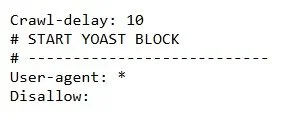
Example of a robots.txt file that allows crawlers to access public website content.
16. Confirm Indexability and Snippet Eligibility
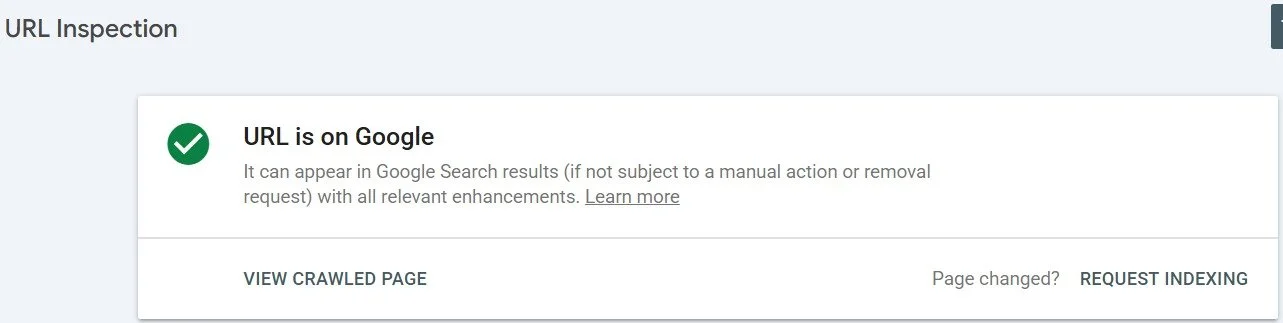
Ensure priority pages return a 200 status, use the correct canonical, remain indexable, and do not accidentally contain nosnippet or restrictive robots directives. You can check that in Google Search Console.
17. Validate Structured Data
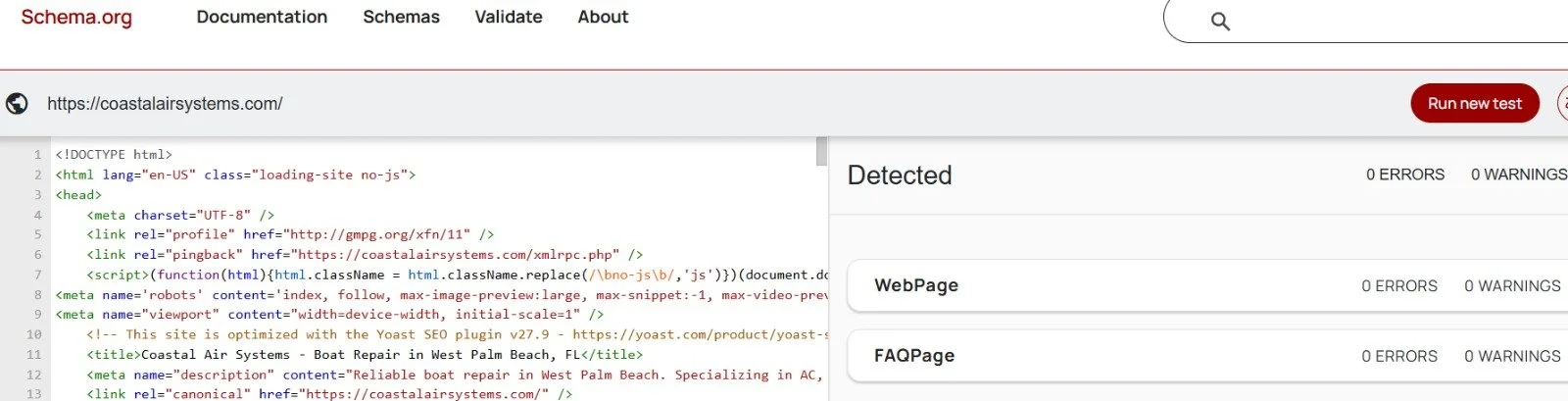
Use accurate Organization, Person, Article, Service, LocalBusiness, and BreadcrumbList schema where relevant. Schema should support visible page content—not introduce claims users cannot see. You can use Schema Markup Validator.
18. Audit Third-Party Authority
Review where competitors earn mentions that you do not: industry publications, associations, podcasts, directories, review sites, communities, and expert roundups. These sources often help AI systems verify brand claims.
19. Evaluate Multimodal Brand Assets
Optimize images, video, charts, transcripts, filenames, captions, and alt text. As multimodal AI search continues to expand, brands need consistent visual and textual signals.
20. Establish Ongoing Monitoring
Repeat high-priority prompts monthly and perform a comprehensive quarterly audit. Track changes alongside branded searches, AI referrals, assisted conversions, qualified leads, and the broader framework used to measure AI SEO success.
The step-by-step AI visibility audit process also reinforces the importance of mapping conversational queries, analyzing sentiment, documenting citations, and progressing from a one-time manual audit to continuous monitoring.
21. PLUS: Use AI Visibility Tools to Track Performance
Manual prompt testing provides a baseline, but platforms such as Peec AI, Profound, OtterlyAI, Semrush’s AI Visibility Toolkit, and Ahrefs Brand Radar make ongoing monitoring more reliable. Use them to track prompt-level mentions, recommendation position, sentiment, citations, competitor share of voice, and visibility changes across AI engines. Keep the prompt set, market, language, and platforms consistent so you measure meaningful trends—not one-off fluctuations.
Some platforms offer free trials or limited free tools, while others require a paid subscription. The right option depends on your business goals, budget, number of brands or markets, and the level of reporting and monitoring you need.
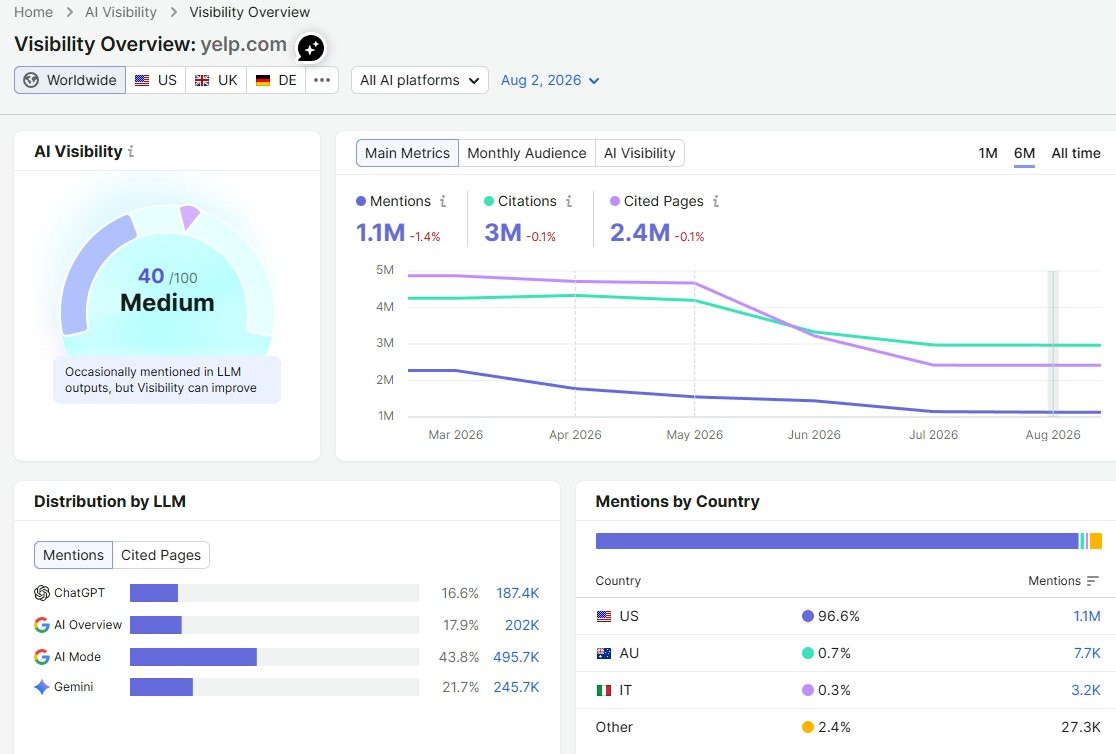
Semrush AI Visibility overview example showing Yelp mentions, citations, cited pages, AI platform distribution, and country performance
FAQs
1. What is an AI visibility audit?
An AI visibility audit evaluates how often and how accurately a brand appears across platforms such as ChatGPT, Gemini, Perplexity, Claude, and Google AI Overviews. It measures mentions, recommendation position, sentiment, citations, competitor visibility, technical accessibility, content quality, and entity consistency.
2. How do I know if ChatGPT recommends my brand?
Create a standardized set of category, problem, comparison, and purchase-intent prompts. Test them in fresh conversations, record whether your brand appears, and note its position, description, sentiment, competitors, and cited sources. Repeat the same test monthly because responses can change.
3. Can a brand rank on Google but remain invisible in AI answers?
Yes. Strong rankings support discoverability, but AI systems may use different retrieval methods and sources. A brand can rank well while lacking clear entity signals, third-party validation, extractable answers, consistent information, or enough authority to earn a confident recommendation.
4. What improves a brand’s chances of being cited by AI?
Publish clear, accurate, well-structured content supported by first-hand evidence and credible sources. Strengthen authorship, structured data, internal linking, technical accessibility, reviews, media coverage, directory profiles, and community mentions. AI systems need both accessible information and independent reasons to trust it.
5. How often should an AI brand visibility audit be performed?
Complete a comprehensive audit at least quarterly. High-priority commercial prompts should be checked monthly, while major reputation, product, pricing, or competitor changes may justify more frequent monitoring. Use the same prompts and scoring criteria to distinguish meaningful trends from normal response variation.
6. Is AI visibility optimization replacing traditional SEO?
No. Traditional SEO remains the foundation for crawlability, indexation, relevance, authority, and Google visibility. AI optimization expands that foundation by examining brand recognition, citations, recommendation quality, sentiment, and visibility across multiple answer engines. The most effective strategy integrates both.
Make Your Brand Easier to Find, Understand, and Recommend!
AI agents cannot confidently recommend a brand they cannot clearly understand or verify. Searches Everywhere helps businesses build that clarity across websites, search engines, AI platforms, paid channels, and the wider digital ecosystem.
Strengthen your discoverability with our Search Everywhere Optimization and AI SEO services, build a recognizable identity through strategic branding services, capture active demand with paid advertising campaigns, and create consistent visual assets with our professional graphic design services.
At Searches Everywhere we can audit your AI visibility and build a brand that customers (and AI systems) can recognize, trust, cite, and choose. Request our services by emailing lauren@searcheseverywhere.com or seo@searcheseverywhere.com
